

- Reduced maintenance requirements compared to older heating systemsLarger heat exchangers that provide more surface area for heat transfer
- Advanced cooling mechanisms that extract maximum thermal energyBy selecting an appropriate boiler heating system, homeowners invest in a reliable, efficient, and environmentally responsible home heating solution that balances personal comfort with broader sustainability goals.
- Intelligent design allowing lower return water temperaturesKey Components and Concepts of Boiler Heating Systems
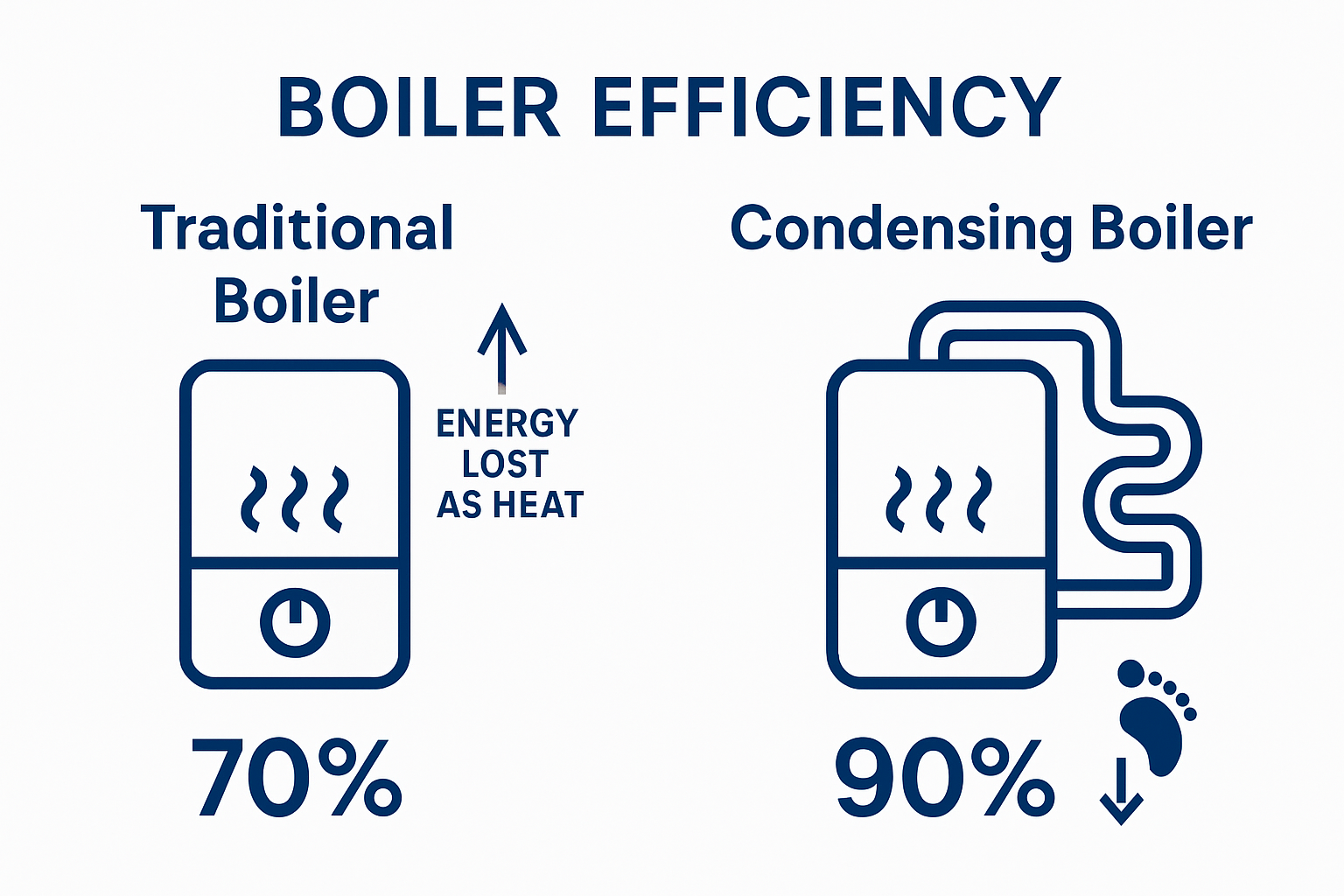
- Ability to operate at efficiency levels up to 95% compared to traditional boilersBoiler heating systems represent complex thermal engineering networks with interconnected components designed to efficiently generate and distribute heat throughout residential spaces. Understanding these components provides insight into the sophisticated mechanics behind modern home heating technologies.
The return water temperature is particularly critical. Traditional boilers typically require return water temperatures around 60-70 degrees Celsius, whereas condensing boilers can effectively operate with return temperatures as low as 30-40 degrees Celsius. This lower temperature range enables more complete heat extraction and significantly reduces energy waste.Primary Boiler System Elements
Moreover, the technology supports more consistent and uniform heating, reducing energy consumption during startup and maintaining more stable internal temperatures. By capturing heat that would otherwise be lost, condensing boilers transform what was previously considered waste energy into a valuable heating resource, representing a fundamental shift in how we approach home heating efficiency.The core components of a boiler heating system work in precise synchronisation to transform energy into usable thermal output.
What are the Environmental Benefits of Condensing Boilers?Our comprehensive boiler replacement guide
Condensing boilers represent a pivotal technology in addressing environmental challenges, offering substantial ecological advantages that extend well beyond traditional heating systems. Their innovative design not only improves home heating efficiency but also plays a critical role in reducing carbon emissions and supporting broader environmental sustainability goals. offers deeper technical insights into these intricate systems.
Carbon Emissions ReductionCritical system components include:
According to the UK Energy Technology ListHeat exchanger: Transfers thermal energy between water and heating medium, installing an energy-efficient condensing boiler can result in annual savings of approximately 6.74 tonnes of carbon dioxide emissions. This significant reduction represents a meaningful contribution to mitigating climate change at the individual household level.Burner: Generates initial heat through fuel combustion
The mechanism behind these emissions reductions lies in the boilers’ ability to capture and reuse heat that would traditionally be wasted. By extracting additional thermal energy from exhaust gases, condensing boilers require less fuel to generate the same amount of heat, directly translating to lower carbon output.Circulating pump: Moves heated water through distribution networks
Environmental Performance CharacteristicsExpansion tank: Manages water volume changes during heating cycles
Condensing boilers demonstrate superior environmental performance through several key attributes:Control mechanisms: Regulate temperature and operational parameters
- Dramatically lower greenhouse gas emissions compared to traditional boilersThermal Distribution and Control Mechanisms
- Reduced overall energy consumptionAccording to
- Enhanced heat recovery mechanismsNational Renewable Energy Laboratory
- Support for national and international carbon reduction targets, effective boiler systems integrate advanced control technologies that optimise energy transfer and consumption. These systems employ sophisticated thermostatic controls that continuously monitor and adjust heating performance.
- Compatibility with renewable energy integration strategiesKey control and distribution concepts include:
Moreover, these boilers align perfectly with emerging environmental regulations and sustainability frameworks. Their design inherently supports the transition towards more responsible and efficient energy consumption models, making them a critical technology in the broader landscape of environmental conservation.Zoned heating capabilities
The environmental benefits extend beyond immediate carbon reductions. By promoting more intelligent energy use, condensing boilers encourage a systemic shift in how we approach home heating. They represent more than just a technological upgrade they are a practical, actionable step towards creating more sustainable living environments and contributing to global efforts to mitigate climate change.Smart thermostat integration
How Do Condensing Boilers Compare to Traditional Heating Systems?Predictive temperature management
The evolution of home heating technology has dramatically transformed how we approach energy consumption, with condensing boilers representing a significant leap forward from traditional heating systems. These advanced units offer substantial improvements in efficiency, performance, and environmental impact, fundamentally changing the landscape of residential heating.Automated efficiency protocols
racteristicsBurner
The fundamental differences between condensing and traditional heating systems extend beyond mere efficiency metrics:Generates heat through fuel combustion
- Heat recovery mechanism (condensing boilers capture latent heat from exhaust gases)Circulating Pump
- Operating temperature rangesMoves heated water around the distribution system
- Carbon emission levelsExpansion Tank
- Initial installation and long-term operational costsAccommodates water volume changes during heating cycles
- Environmental sustainability impactControl Mechanisms
Traditional boilers typically release exhaust gases at temperatures around 200-300 degrees Celsius, essentially discarding valuable thermal energy. Condensing boilers revolutionize this approach by cooling these gases to the point of water vapour condensation, extracting additional heat that would previously have been vented outside.Regulate temperature and control system operation
Moreover, condensing boilers support more consistent and uniform heating, reducing energy consumption during startup and maintaining more stable internal temperatures. They represent a technological solution that not only reduces energy bills but also contributes meaningfully to reducing household carbon footprints, marking a significant advancement in home heating technology.Radiators/Underfloor
Below is a comparison table outlining the key differences between condensing boilers and traditional heating systems, helping homeowners easily understand efficiency, cost, and environmental contrasts.Distribute heat into living spaces
| Feature/CharacteristicThermostat | Condensing BoilerMonitors and adjusts temperature for comfort and efficiency | Traditional BoilerTypes of Boiler Heating Systems and Their Applications |
|---|---|---|
| Typical Efficiency (%)Boiler heating systems encompass diverse technological approaches, each designed to meet specific residential heating requirements. Understanding these variations enables homeowners to select the most appropriate solution for their unique living environments. | 90-95Fuel-Based Boiler Classification | 55-70The primary categorisation of boiler systems stems from their fuel source and operational mechanisms. |
| Heat Recovery MechanismOur comprehensive heat pump installation services | Captures and reuses heat from exhaust gases demonstrate the evolving landscape of residential heating technologies. | Releases heat in exhaust gasesBoiler systems can be classified based on fuel types: |
| Flue Gas Temperature (°C)Gas boilers: Most common, utilising natural gas for heating | Cooled to 30-40 (to induce condensation)Oil boilers: Traditional systems using heating oil | Released at 200-300Electric boilers: Emerging technology with zero direct emissions |
| Average Annual Savings (£)Biomass boilers: Sustainable options using organic materials | Up to 320Thermal Delivery and Design Configurations | Minimal savings (older systems)According to |
| Carbon EmissionsNational Institutes of Health research | Significantly reduced, modern boiler systems increasingly prioritise environmental sustainability and energy efficiency. The thermal delivery methodology significantly influences system performance and residential comfort. | Higher due to fuel wasteKey boiler system design configurations include: |
| Environmental ImpactCombi boilers: Compact units providing instant hot water and heating | Supports sustainability targetsSystem boilers: Featuring separate hot water storage cylinders | Less environmentally friendlyConventional boilers: Traditional designs with separate water tanks |
| Installation CostCondensing boilers: Advanced technology capturing waste heat for improved efficiency | Slightly higher, offset by long-term savingsEach configuration offers distinct advantages, enabling homeowners to balance performance, space requirements, and energy consumption based on their specific household needs. | Often lower, but less efficientCommon Issues and Considerations for Boiler Maintenance |
Ready to Experience the Full Advantages of a Condensing Boiler?Boiler maintenance represents a critical aspect of ensuring long term system performance, energy efficiency, and household safety. Proactive management prevents costly repairs and extends the operational lifespan of heating infrastructure.
Are you tired of wasting energy and seeing high heating bills, even when your home never feels quite warm enough? This article highlights how condensing boilers reclaim heat that traditional systems waste, lowering both your energy costs and carbon emissions. Many homeowners in Edinburgh and Midlothian face outdated systems, inefficient heating, and growing pressure to reduce their carbon footprint. Upgrading to a high-efficiency condensing boiler puts you in control of your comfort and your home’s long-term sustainability.Critical Diagnostic Indicators
Now is the perfect time to turn knowledge into action. The team at Homeowners must remain vigilant about recognising potential system irregularities. Thermatek HeatingOur comprehensive boiler replacement services specialises in hassle-free, energy-efficient can help address complex maintenance challenges before they escalate.boiler replacementsKey warning signs requiring immediate attention include: and comprehensive Unusual noises during heating cyclesboiler servicingInconsistent water temperature, delivered by trusted Gas Safe Registered engineers. Take the first step towards a warmer, greener home. Request your free quote or expert consultation today and discover why so many local homeowners rely on Thermatek for the smartest heating solutions.Visible water leakage
Frequently Asked QuestionsIncreased energy consumption
What is a condensing boiler?Persistent pilot light issues
A condensing boiler is a highly efficient heating system that captures and reuses heat from exhaust gases, reducing energy waste and enhancing overall energy efficiency compared to traditional boilers.Preventative Maintenance Strategies
How do condensing boilers improve energy efficiency?According to
Condensing boilers utilize an innovative heat recovery mechanism that extracts latent heat from water vapour in exhaust gases, achieving thermal efficiencies of up to 95%, while traditional systems typically operate at 55-70% efficiency.U.S. Department of Energy research
What are the environmental benefits of using a condensing boiler?, systematic maintenance significantly improves boiler reliability and operational efficiency. Professional interventions can mitigate potential system failures and optimise thermal performance.
Condensing boilers significantly reduce carbon emissions and energy consumption by recycling heat that would otherwise be lost, contributing to lower greenhouse gas emissions and helping to meet sustainability goals.Essential maintenance considerations include:
How do condensing boilers compare to traditional heating systems?Annual professional inspection
Condensing boilers outperform traditional heating systems by capturing additional heat from exhaust gases and achieving higher efficiency rates, leading to reduced energy bills and a smaller carbon footprint.Regular cleaning of heat exchanger surfaces